Christianity Card Game — Symbols

What each mark on a card means
Printable PDF Download the PDF All 5 sheets (Duel, Playing Area, Battle, Symbols, Parts of a Card) — one PDF Hannibal vs Rome symbols

Paying and spending

Pay 2 Cost from your Cost Zone — or X, and the card says what X is.
Pay 2 plus X — one cost, X as the card says.
A cost that starts an ability — pay it to do what follows.
Pay 4 all from ONE source (no mixing) — or 5 from at most two sources.
Pay 2, paid by someone ELSE — another player, not you.
Resist cost: what must be paid to resist this card.
Rotate — turn the card sideways to use it.
A rotate ability: rotate this card to do what follows.

Gaining and losing

Draw 1 — into your Hand; straight into your Cost Zone face down; or into your Cost Zone FACE UP, playable from there.
Lose 1 — discard a card (the card says from where).
Humility — gain 1, lose 1.
Counters — a counter, one showing 5, add 2, remove 1.
A Weaken counter. A card with any Weaken counters can be discarded by paying its Resist cost minus the number of Weaken counters on it.
A Strengthen counter. Each one adds to the card's Resist cost, making it harder to remove.
A token.

Kinds of card

Unction (Righteous or Evil) and the white Impulse — the fastest cards: play them at any time, except in the middle of the . Every Unction also counts as an Impulse.
Maturity — only playable on your turn, during your .
Resistance and Response — played only in response to an opponent’s card being played. A Resistance answers a Temptation; a Response is the white one, for either side (its arrow also sits beside every Resistance card’s icon).
Habitual — Righteous or Evil — stays in play. A Righteous Habitual only on your turn, in your ; an Evil Habitual only on your own turn.
Undertaking — the slow white card: only playable on your turn, during your .
Temptation — Impulse speed: play it at any time, except in the middle of the .
Permanent — stays in play after it is played.
Building — stays in play like a Habitual (shown with the Permanent stone). A Store sells things — tokens, for now. Every ability needs one of your side’s Habituals rotated AND its cost, on your turn; never while the Building is rotated. In Battle it cannot Rally, Attack or give damage while Defending — but it can be attacked and defended.

Rotate as a cost

Rotate a Habitual you control — on your side’s cards its own Habitual; on a White card, either side’s.
Rotate 2 Habituals you control — or as many as the number says. On a White card, either side’s.
Rotate a Permanent you control.
Rotate a Token you control.
Rotate a face-up card in your Cost Zone.
Both Habituals, or — a Righteous or an Evil Habitual (no rotate).
Both Habituals, and — a Righteous and an Evil Habitual.

Limits and levels

At most so many times — per turn, per phase, per round (every player’s turn), or in the whole game.
At most once per round for each Habitual (or Evil Habitual) you have — a Building’s limit.
Dependence Level 2 — exactly, 2 or higher, 3 or lower.
Reversal 1 — a loss of 1 becomes a gain of 1.

Sides and modes

The Righteous side, the Evil side.
The opposing side — on white cards, which either side may play.
Modes — Evil played by the game itself (no Evil player); Duel (Righteous against an Evil player); Solo (one player).

Places on the table

Your Deck, your Hand.
The Cost Zone — the cards that pay costs.
The piles — Discard; Resisted (Temptations resisted); Failed (Temptations not resisted).
In Play; the Active zone, where a card being played waits.
Face up, face down.

Phases of a turn

In order: Reset (cards back upright) · Check (start-of-turn effects) · Draw · Cost Zone (cards into the Cost Zone) · Evil (the Evil side draws and plays) · Resistance (only Resistance cards) · Main · Discard (down to your hand size).

Card colors — Righteous

Blue, Green, Silver — and Gold, more than one color.

Card colors — Evil

Red, Orange, Brown, Black.

Card colors — White

White — either side may play it.

Boosts — paying extra for more

A boost is a line in a blue band: a cost, a colon, and what it does — for example Draw a card. When the card is played, the player the balls name may pay that cost to get the extra. The balls say who may pay; the marks in front of them say how often and when.

Who may pay

Self — Only the player who played the card may pay.
Brotherly — Another Righteous Player may pay — the dark ball is you, the lit one your partner.
Any — Anyone on your side may pay — not the other side.
Bounce-back — When anyone ELSE pays a boost, you may then pay this one.

How often and when — in front of the balls

∞ Multi — May be paid more than once.
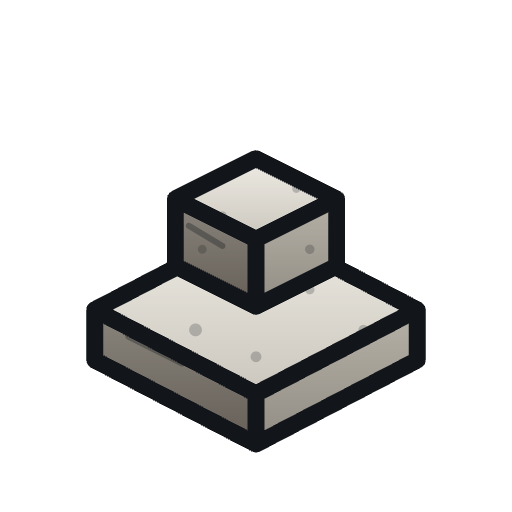
Perm — the stone — May still be paid while the card is in play. Only on Habituals and tokens, and nearly always with a limit such as MAX 1 /turn.
⚡ Fast — Paid BEFORE the card does its action, not after.
⚡⚡ Ultra fast — Lay the card down before paying its cost, pay this instead, and do what it says — instead of playing the card, or as well. Always the top line of the card.

Put together

Multi Any — Anyone on your side, as many times as they like to pay.
Perm Any — Anyone on your side, while the card is in play.
Perm Multi Brotherly — Another Righteous Player, more than once, while the card is in play.
Fast Self — Only you, paid before the card’s action.